


Driven by empathy, experience, education and acumen, Bluebonnet's passionate staff, leadership, members and volunteers are dedicated to fostering a fully-realized community of equine care that's comprehensive, trustworthy, impactful and sustainable.
Our reach is built on impactful programs, service and support hand-in-hand with equine professionals and related organizations for horses and humans in need.




1624
Horses Rescued
through partnerships with law enforcement and animal control agencies, other rescues and humane society, and horse lovers
1350
Horses Placed
with loving adopters
81/200
Owners and Horses
horses served through the Bluebonnet Horse owners assistance programs in 2025



Stop the movement of the carousel by hovering over it with your mouse. Advance the carousel while hovering by clicking the arrows on the right or left side.
Current News / PR


Thought Leadership



A Community of Rescue & Support for Horse and Human
Our community uniquely provides a vital network of empathy, understanding, and encouragement fundamental to preventing burnout and fostering a sustainable and joyful relationship with equine care.
Our community is not merely a network of enthusiasts, urgent rescue units, or reactive horse owners; but a sanctuary of compassion, a center of knowledge, and a beacon of holistic support for both horses and their caretakers.
PO Box 632
College Station,
TX 77841-0632
info@bluebonnetequine.org
(888) 542-5163
A Community of Rescue & Support for Horse and Human
Our community uniquely provides a vital network of empathy, understanding, and encouragement fundamental to preventing burnout and fostering a sustainable and joyful relationship with equine care.
Our community is not merely a network of enthusiasts, urgent rescue units, or reactive horse owners; but a sanctuary of compassion, a center of knowledge, and a beacon of holistic support for both horses and their caretakers.
PO Box 632
College Station,
TX 77841-0632
info@bluebonnetequine.org
(888) 542-5163
Silos to Solidarity:
Why Equine Rescue Has Never Been
More Ready for True Community
By Jennifer Williams, PhD, Executive Director, Bluebonnet Equine
In today’s overstimulated world, it’s easier than ever to feel alone. I know I do. We scroll, we click, we consume. But rarely do we connect. And while the noise grows louder, something quieter and irreplaceable is slipping away… our bond with the natural world, with animals, and with one another.
At Bluebonnet Equine, we see this erosion every day. But I’m not just referring to broken fences or neglected horses. It’s evident in the hearts of people who once found meaning, responsibility, and healing with horses. The truth is simple, and urgent: our culture is losing touch with the outside world, and with it, the wisdom and wonder of horses.
But here’s another truth… and it’s one we stake our future on.
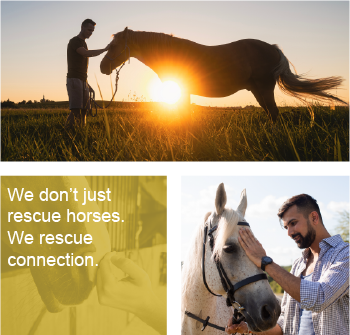
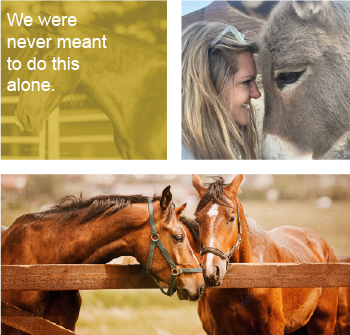
We were never meant to do this alone.
We’re watching a slow erosion of equine literacy across generations. Fewer young people grow up with horse sense. Fewer parents understand the role animals can play in a child’s resilience, emotional growth, or sense of purpose.
And it’s not just about horses. It’s about the broader disconnect from care, stewardship, and consequence in a world where so much feels disposable.
What does horse ownership teach? Patience. Attunement. Accountability. Empathy that is embodied, not just intellectual. In a society that moves at swipe speed, these qualities and values are medicines for modern life.
If we want a more grounded, attentive, resilient generation, we need places like Bluebonnet to thrive—not as havens of nostalgia, but as beacons of what’s possible.
The Problem Isn’t the Heart: It’s Isolation.
Many horse rescue operations are heroic in their effort. They leap into action when the call comes. They pull a starving gelding from a dry pasture or nurse a neglected mare back to life. But too often, these efforts are reactive, unsustainable, and emotionally exhausting. It’s little wonder that these caregivers feel alone and unsupported.
I know it’s hard to hear this, but it comes from my heart. It isn’t a critique, it’s a call to evolve.
Because while passion and intent can fix broken fences and provide life-giving care to horses, it doesn’t automatically reduce the number of emergencies to respond to. It isn’t sustainable.
We must go beyond reaction. We must build resilience. We must be sustainable. We must be here as long as there are horses needing rescue.
From a Network to a Commons
Imagine a future where:
Rescues don’t compete for resources—they coordinate them.
New horse owners are mentored, not scrutinized.
Equine rescuers and caregivers have built-in support systems that prevent burnout before it begins.
Equine professionals, therapists, and educators share tools, stories, and practices in real time.
The next generation doesn’t just learn about horses—they grow up in community with them.
That is the world Bluebonnet is working to build.
Why Community is Our Mission
At Bluebonnet, we don’t just rescue horses. We build the conditions for them to flourish, before, during, and long after a crisis.
This is our unfair advantage, and it stems from three essential strengths:
Our Mission: We are committed to creating a fully-realized community of equine care that goes beyond the initial rescue. This community is comprehensive, trustworthy, impactful, and sustainable. That’s not a slogan; it’s our strategic north star.
Our People: Our staff, members, and volunteers are driven by more than empathy. They are equipped with experience, education, and an understanding that long-term care is a shared responsibility—not a solo endeavor.
Our Reach: We actively welcome partnerships with equine professionals, mental health advocates, therapeutic programs, and rural leaders. Our network isn’t just wide—it’s interwoven.
Together, these forces let us do something more profound than intervention. They let us cultivate a living ecosystem where knowledge is passed on, where support is always available, and where horses and humans heal together.
An Invitation Forward
We live in a fragmented time. But that’s precisely why the call to community has never been more important. Not just for our horses. But for our humanity.
At Bluebonnet, we believe the most radical thing we can do is stay connected—to each other, to the animals we care for, and to the deeper rhythms of stewardship that have always guided us.
If you’ve felt the pull to be part of something larger than yourself… if you believe that healing isn’t just something we do, but something we build together… if you long for a world where empathy is practiced in barns, in boots, and in real time…
Then come be part of it.
We are not just a rescue.
We are a community.
And we’re just getting started.
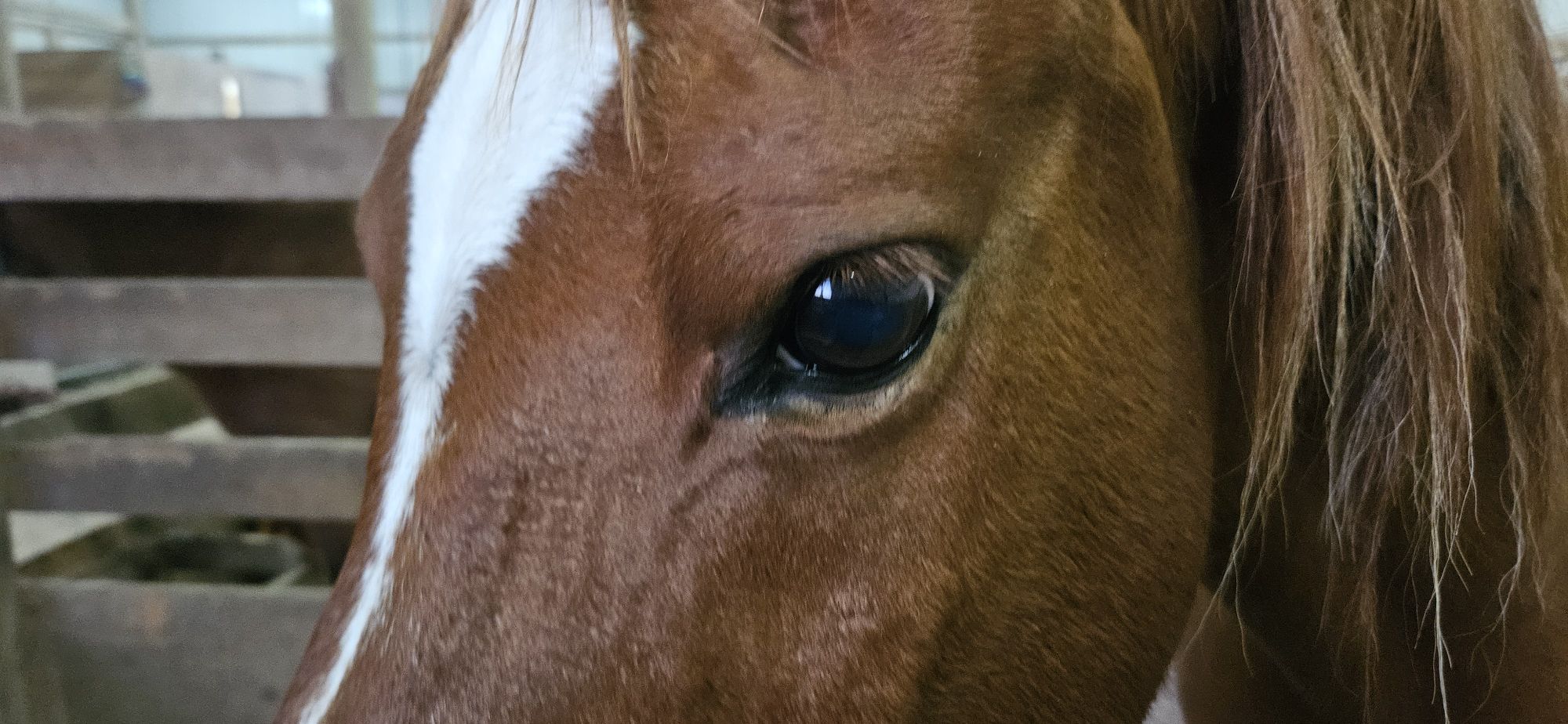
The Future of Equine
Care is Connection
… Not Competition
By Jennifer Williams, PhD, Executive Director, Bluebonnet Equine
The landscape of horse rescue and equine wellness is full of passion. This isn’t hard to see, but it’s also full of fragmentation and isolation. Organizations spring up around crises, driven by urgent need and heartfelt mission. But without systems of shared knowledge, shared support, and shared responsibility, that urgency burns people out. The horses suffer. And the long-term vision is lost.
If you spend enough time in horse rescue, you start to see the same patterns repeat—not just in horses, but in people.
You see the burnout, duplication of effort and volunteers stretched thin. As well as rescues fighting over limited grants, and well-meaning organizations siloed from each other.
And eventually, you have to ask a hard but honest question:
What if the biggest problem in the horse world … is how alone we all are?
This isn’t a failure of heart. It’s a failure of community.
As author and commons researcher David Bollier writes:
“The commons is not a resource. It is a social system for managing resources—one that values stewardship, equity, and participation.”
— David Bollier, “Think Like a Commoner”
That’s exactly what we believe at Bluebonnet.
What we’re really missing isn’t just more rescues and adoptions. It’s a robust equine community—a shared ecosystem of knowledge, care, tools, and trust.
A commons is more than cooperation. It’s a reorientation away from ownership, competition, and burnout, and toward sustainability, reciprocity, and shared experiences.
Imagine this:
A digital knowledge base for equine health, rescue best practices, legal aid, and behavioral rehab—updated in real time by organizations across the country.
A coordinated transport and foster network, so no horse falls through the cracks because of geography.
Mental health support for rescue workers and volunteers, embedded into the work—not as a luxury, but a necessity.
Microgrants and pooled funding models, so one organization’s success becomes many communities’ progress.
Seasonal meetups and virtual councils that build culture, not just strategy.
This isn’t idealism. It’s what a sustainable eco-system requires to serve both horses and the humans who care for them.
Why It Works: The Data is Clear
This isn’t just a dream. The benefits of integrated care systems and commons-based models are well-documented:
Shared community initiatives reduce burnout by 60% in caregiving-intensive environments (Journal of Applied Psychology, 2021).
Collaborative coalitions outperform siloed efforts in resource efficiency, volunteer retention, and crisis response speed by up to 4x (Stanford Social Innovation Review, 2019).
In human healthcare, integrated community models increase patient well-being and care continuity by over 45% (BMJ Open, 2020). Animals—and their caregivers—deserve no less.
And perhaps most telling: in rural and under-resourced areas, commons-based models restore not just services—but trust.
A New Story for Horses and Humans
This isn’t just about horses. It’s about healing something deeper in our social fabric.
Our community says:
You don’t have to do it alone.
Your burnout is a signal, not a weakness.
Care is a relationship, not a transaction.
As Wendell Berry once wrote:
“The care of the Earth is our most ancient and most worthy, and after all our most pleasing responsibility.”
The same is true of animals. And of each other.
The Role We Endeavor to Serve
At Bluebonnet, we see ourselves not as the center of the story—but as a catalyst toward something bigger.
We’re piloting models of integrated care.
We’re training mentors who can train others.
We’re building bridges with therapists, educators, and community health leaders who believe—like we do—that horses aren’t just beings to be saved, but partners in the saving.
And we’re inviting others to co-create what comes next.
An Invitation to Join the Movement
If you run a rescue and feel like you’re barely keeping up—let’s talk.
If you’re a vet tech with knowledge to share—let’s share it.
If you’ve loved a horse and know what they gave you—you’re already part of this story.
Let’s build the next chapter together.
Across fences.
Across missions.
Across disciplines.
Because we were never meant to do this alone.
And now, we don’t have to.

December 5, 2025
An Inspired Chat with Dr. Jennifer Williams
Thank you to VoyageHouston magazine for interviewing one of our founders and our Executive Director. Dr. Jennifer Williams, and giving her a chance to talk about Bluebonnet Equine and the important work we do.
October 15, 2025
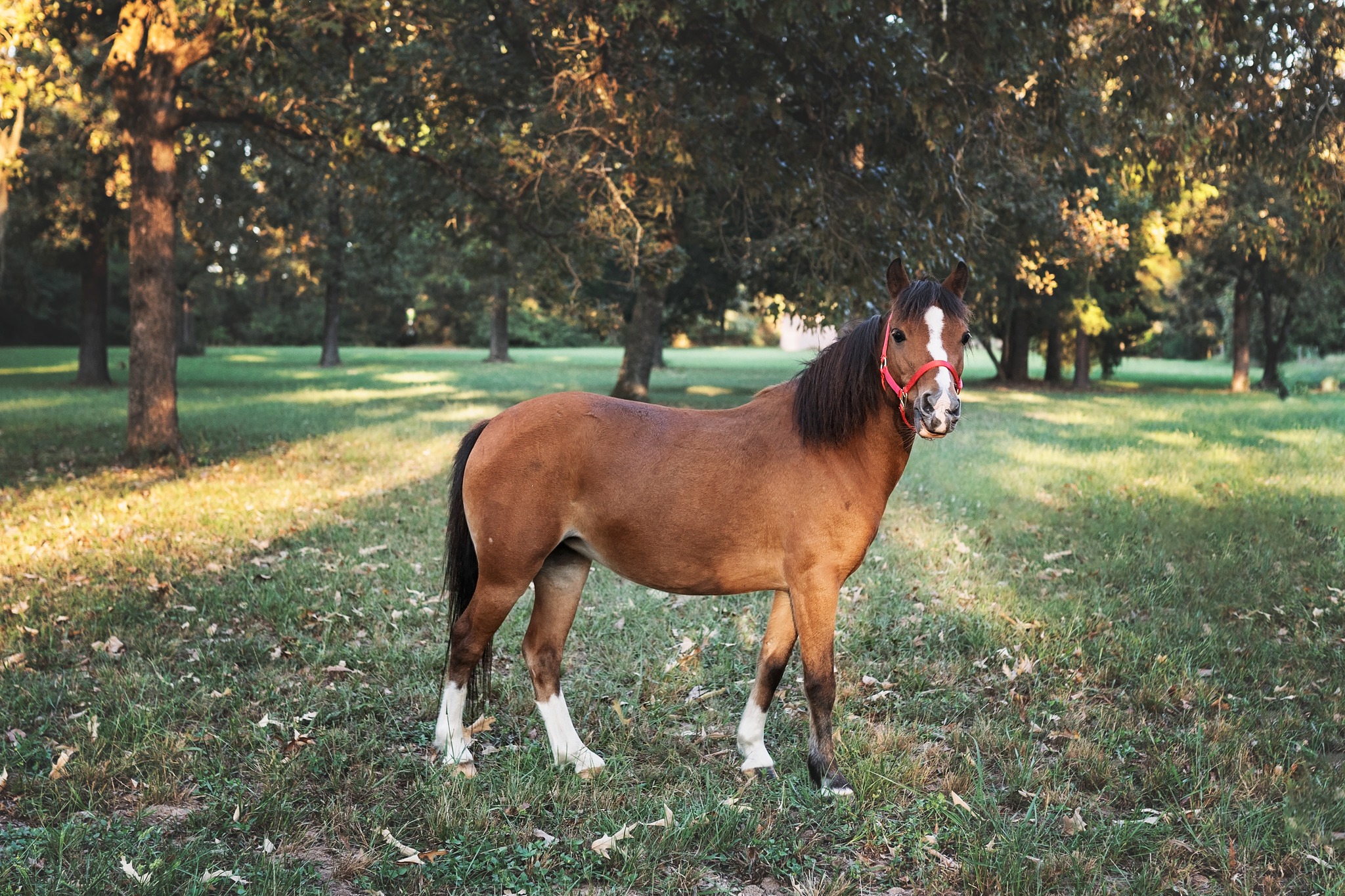
Help Us Keep Horses with Their Owners
In 2020, we launched our Horse Owners Assistance Program. The purpose was to provide short term assistance with hay and grain to help horse owners experiencing a temporary financial hardship. Our goal was to keep horses with the people who loved them.
For the past five years, we’ve been doing just that: letting owners keep the horses they love when they’re experiencing a job loss, death in the family, unexpected medical bills, etc.
This year, the need is greater than before. The economic hardships faced by many right now, job furloughs, job loss, etc. means more and more people need our help. The government shutdown is also impacting horse owners, and we’ve started to receive request for help from federal employee families. But we’ve nearly depleted our funds for 2025.
Your donation may make the difference between someone being able to feed – and keep – their beloved horse and that same person having to surrender their horse to a rescue. I don’t want to see anyone giving up their beloved horses due to a short term financial problem.

October 15, 2025
Why Sponsor a Horse?
Bluebonnet is only able to help the number of horses who come to us each year because of our generous donors. Caring for emaciated horses, injured horses, and ill horses and housing those horses once they’re healthy until they’re adopted is expensive. In 2024, we spent over $130,000 on veterinary care and nearly $20,000 on farrier care. We also spent nearly $150,000 to feed our horses living at foster homes.
When you foster a horse, you provide them with feed, hay, farrier care, and veterinary care.
Types of Sponsorships
| Full Sponsorship |
|---|
| $200 per month |
| Covers hay, grain, and farrier |
| There will be only one full sponsor plus a veterinary sponsor listed on the horse’s page. |
|
Benefits: – Name listed on the horse’s webpage – Sponsor intro and photo on the horse’s Facebook page – A sponsor certificate in the mail – A mailed photo of their horse – An emailed update if the horse is adopted or passes away – Two tickets to the Bluebonnet Horse Expo – Additional emailed update and photo of the horse after six months of sponsorship – A personal “meet and greet” with the sponsored horse if the horse attends the Expo. |
| Half Sponsorship |
|---|
| $100 per month |
| Covers 1/2 hay, feed, and farrier |
| There may be multiple half and quarter sponsors as well as a veterinary sponsor listed on the horse’s page |
|
Benefits: – Name listed on the horse’s webpage – Name listed on the horse’s Facebook page – A sponsor certificate in the mail – A mailed photo of their horse – An emailed update if the horse is adopted or passes away – Ticket to the Bluebonnet Horse Expo |
| Quarter Sponsorship |
|---|
| $50 per month |
| Covers 1/4 of hay, feed, and farrier |
| There may be multiple half and quarter sponsors as well as a veterinary sponsor listed on the horse’s page |
|
Benefits: – Name listed on the horse’s webpage – Name listed on the horse’s Facebook page – A sponsor certificate in the mail – A mailed photo of their horse – An emailed update if the horse is adopted or passes away |
Additional Sponsorship Opportunities
| Veterinary Sponsorship |
|---|
| $750 per year |
| Covers routine veterinary care for the horse for one year: vaccinations, coggins, dental work, farm call, exam |
| There will be only one veterinary sponsor listed on a horse’s page. |
|
Benefits: – Name listed on the horse’s webpage – Name listed on the horse’s Facebook page – A sponsor certificate in the mail – A mailed photo of their horse – An emailed update if the horse is adopted or passes away – Two tickets to the Bluebonnet Horse Expo |
| Annual Full & Veterinary Sponsorship |
|---|
| $3,000 per year |
| Covers farrier, feed, and veterinary care for one year |
| Horses who have an annual full sponsorship plus veterinary sponsorship will only have one sponsor listed on their page. This sponsor may be an individual or company, and if a company sponsors a horse their logo and/or website link will be included on the horse’s page. |
|
Benefits: – Name listed on the horse’s webpage – Sponsor intro and photo on the horse’s Facebook page – Link to business and logo if the sponsor is a business – A sponsor certificate in the mail – A mailed photo of their horse – An emailed update if the horse is adopted or passes away – 10 Tickets to the Bluebonnet Horse Expo – Additional emailed update and photo of the horse after six months of sponsorship – A personal “meet and greet” with the sponsored horse if the horse attends the Expo |
Sponsors have the option to opt out of any or all sponsorship benefits.
If a monthly sponsored horse is adopted or passes away, his or her sponsor will be sent a message and given the opportunity to switch their sponsorship to another horse.
If a horse with an annual full & veterinary sponsorship passes away before he or she has been in the rescue for twelve months, the sponsor will receive an email and be given the option to switch the remaining sponsorship funds to a newly arrived horse or put the unused sponsorship funds into the general sponsorship pool used for horses with no sponsors.

July 7, 2025
Meet Some of the Bluebonnet Miracles
When you support Bluebonnet, you make miracles happen for horses. I hope you enjoy meeting a few of the horses you’ve helped.
Special thanks to Juan Manuel for the gorgeous music.
August 23, 2023
Bluebonnet Awarded 55 Horses and One Donkey in Brazoria County Cruelty Case
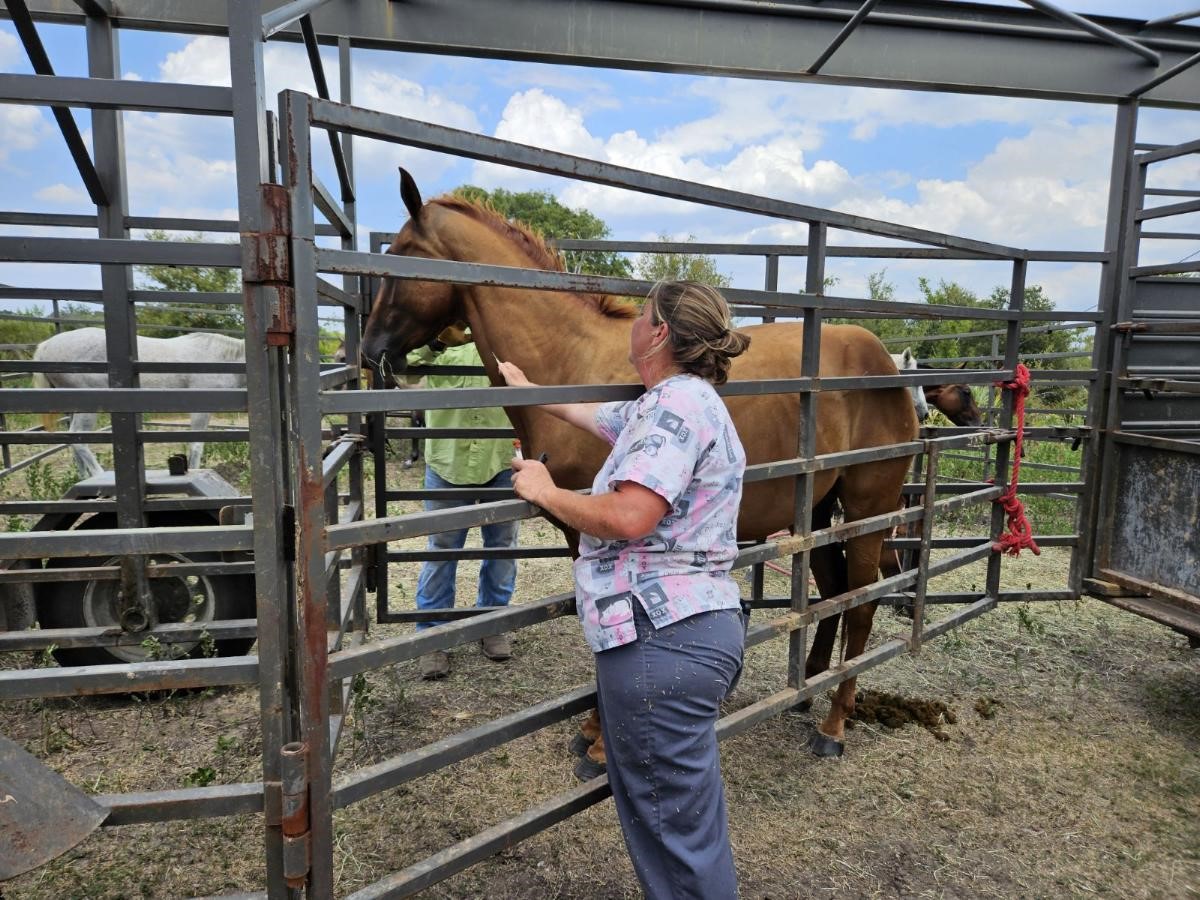
Bluebonnet Equine Humane Society was awarded 55 horses and one donkey from a neglect and cruelty case in Brazoria County, Texas. These horses were part of a large case involving both cattle and horses, and Bluebonnet had worked with veterinarian Dr. Kris Anderson and the Brazoria County Sheriff’s Department on this case.
Taking in 56 animals at once is a huge, and very expensive, undertaking – but it is why we exist. Right now, we estimate that the initial veterinary care for these horses will be over $20,000 – and that is with our veterinarian donating part of her work.
Since many of these horses are not halter broke, we will also need to pay trainers to work with them so they’re able to be handled.
And of course, there are also many other expenses we incur in handling such a large case. If you are able, please donate – this is the largest case we’ve ever been involved in. You can donate via Paypal or you may mail a check to BEHS, PO Box 632, College Station, TX 77841.
We also want to thank the Brazoria County Sheriff’s Office, Brazoria County Sheriff’s Office – Animal Control, Sweeny Fire and Rescue, River’s End Fire Dept., Equine Mobile Veterinary Services: Kris Anderson DVM, the Brazoria County Attorney’s Office, and the Bluebonnet volunteers all of who have worked to get these horses safe. Thank you – you have made a huge difference in the lives of these horses.
News stories:
Click 2 Houston
Houston Chronicle
RideShare Houston
Selected campaign not found.
Get Bluebonnet News & Events Delivered To You.