

Our Purpose
It has been well documented that when we immerse ourselves in a community that nurtures our interests, we do not merely pursue our goals; we excel in them.
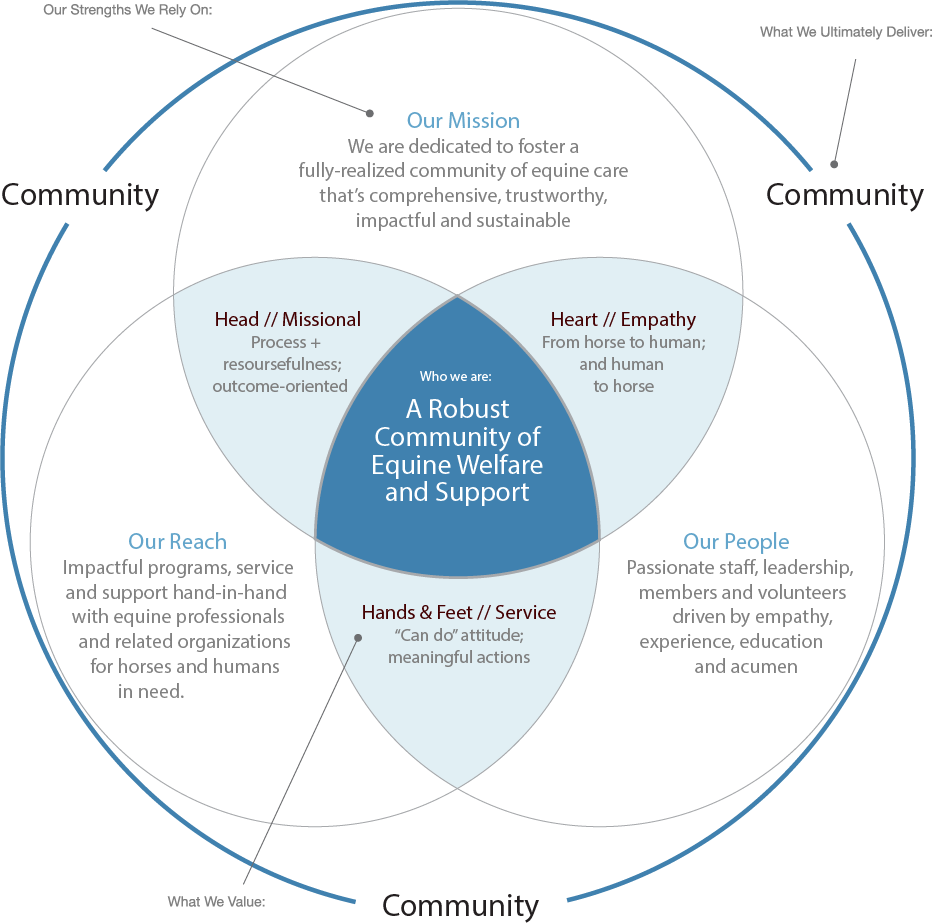
Our mission is to provide a community of equine rescue and support for horses and humans.
And we become more resilient, more dedicated, and ultimately, more successful. You could say that we are hardwired to desire community.
Our community uniquely provides a vital network of empathy, understanding, and encouragement fundamental to preventing burnout and fostering a sustainable and joyful relationship with equine care.
Our community is not merely a network of enthusiasts, urgent rescue units, or reactive horse owners; but a sanctuary of compassion, a center of knowledge, and a beacon of holistic support for both horses and their caretakers.
Our History
BEHS was formed in March 2005 by a group of horse enthusiasts who felt there was a need for a new rescue to help horses and other equines throughout Texas and Arkansas. The new organization was publicly announced on March 12th by President Jennifer Williams as an introduction to her talk entitled “How Rescues Help Unwanted Horses” at the American Quarter Horse Association’s annual convention in St. Louis, MO.
Our Values
Our community is not merely a network of enthusiasts, rescue units, or horse owners; but a sanctuary of compassion, a center of knowledge, and a beacon of holistic support for both horses and their caretakers.
As such, we feel uniquely suited to provide a growing vital network of empathy, understanding, and encouragement fundamental to preventing burnout and fostering a sustainable and joyful relationship with equine care.
Leadership
Bluebonnet Staff
Dr. Jennifer Williams // Executive Director & Co-Founder
Volunteer Staff
Bluebonnet Board of Directors
Financial Information
Form 990
FAQ’s
What states does BEHS operate in?
BEHS operates throughout Texas. We also conduct adoptions throughout parts of Oklahoma and Louisiana that are near the Texas border.
How long has the organization been in existence?
BEHS was formed in February 2005. Many of BEHS’ officers, directors and volunteers have been involved with rescue work for much longer.
Is my donation tax deductible?
Yes. Bluebonnet Equine Humane Society is a 501(c)(3) organization so monetary donations and donations of goods are tax-deductible. EIN: 84-163775
Does Bluebonnet accept donated goods?
Bluebonnet accepts donations of hay, grain, de-wormers, vaccinations and other medical supplies as well as feed supplements and medications. These items will be used to care for horses in the rescue. You can also donate new and used tack, farm/ranch equipment and horse/stock trailers which may be used for the horses in the rescue or sold at a fundraiser to raise money. Donations of horse or ranch themed art, home decor, jewelry or clothing will be sold at a BEHS fundraiser to raise money to care for the horses. Other donations will be considered on a case-by-case basis. Please e-mail us for more information.
How do I make a monetary donation to Bluebonnet?
You can make a monetary donation through our donation form using Paypal or you can mail in a donation to BEHS at P.O. Box 632, College Station, Texas 77841-0632.
Can I specify how I want my donation allocated?
What are the advantages of adoption?
Adoption is a wonderful way to get a horse. Bluebonnet horses have gone on to make great companions, trail horses, children’s horses and show horses. When you adopt, not only do you get a great horse but also you know you are helping a formerly abused or neglected horse find a great home. When you adopt, you get a horse who has current vaccinations and a current Coggins test. The horse has had his teeth examined and floated if needed and is current on de-wormer and farrier work. The horse has been evaluated to the best of our abilities, and if your adopted horse doesn’t work out, you can return him for a full refund of your adoption fee in the first 30 days and a partial refund during the first year.
Are there any restrictions on what I can do with an adopted horse?
Bluebonnet does not allow adopters to breed their adopted horses or sell them or give them away. However there are no restrictions on the type of riding, showing, competing or work adopters can do with their horse as long as the horse is properly cared for.
How do I adopt a horse?
How long does it take to adopt?
It varies. Some adoptions take as little as a few days to complete while others may take several weeks. If the adopter is flexible with when he can schedule the home visit, the adoption often occurs very quickly.
What qualifications does it take to adopt?
Adopters must have a safe place to keep their horse. Fences should be in good repair and the horse needs access to shelter and plentiful water. The adopter should have another horse to serve as a companion to the adopted horse or be prepared to adopt a companion.
Can I meet the horse I want to adopt before I apply?
Bluebonnet requires potential adopters to be approved before going to meet the horses they are interested in. This protects the rescue from liability issues.
How much does it cost to adopt?
Adoption fees vary. Non-ridable/companion only horses do not have an adoption fee. Other fees are based on the horse’s health, abilities, training and age. Adoption fees are not negotiable.
Why do I need to pay a membership fee in order to adopt?
The membership fee helps cover the cost of getting adopters approved. We used to charge a processing fee, but we changed that to a membership fee instead. Memberships are good for twelve months (instead of a calendar year) and members receive free admission to some events and discounted admission to others.
What areas do you adopt to?
We adopt horses throughout Texas. We will also consider adoptions parts of Arkansas, Louisiana, and Oklahoma that border Texas.
I can’t keep my horse. Can I donate him to Bluebonnet?
We take donated horses when we have space. We are unable to take horses without current, negative Coggins, blind horses, or horses with neurological disease. If you would like us to consider your horse, please fill out our intake request form.
Can I specify in my will that my horses go to Bluebonnet in case of my untimely death?
We do have a program to accept willed horses. They must be accompanied by a $10,000 bequest per horse and either must be located in Texas or the Executor of your will or Trustee of your trust must make arrangements to transport the horse to Texas.
What are the requirements for fostering a Bluebonnet equine?
We ask that all potential foster homes join the rescue and apply to become a foster home. Foster homes must be able to provide safe fencing, shelter (in many situations trees can provide adequate shelter), water and hay and grain for their fostered horses. Potential foster homes who have little horse experience or little experience rehabilitating horses are mentored by more experienced foster homes.
Click here to complete the Fostering Application.
Does Bluebonnet cover the cost of care for fostering a horse and will I be reimbursed for out of pocket expenses?
Bluebonnet reimburses for or pays for pre-approved veterinary care, pre-approved medications and supplements, and pre-approved corrective farrier work. Foster homes should contact the Fostering Coordinator to receive preapproval. We reimburse for paste dewormers and routine hoof trims. We also pay a stipend per month per horse (paid out quarterly) to help with the cost of hay and grain. Any expenses not covered by the stipend may be tax-deductible since we are a nonprofit.
Over time, BEHS plans to reimburse for more expenses as the organization brings in more funds.
Can I foster a horse that I would like to adopt?
If a horse already has a foster home, we do not move him to a new home so that they can test him out before adoption. Exceptions may be made if the current foster home has requested that the horse be moved. The adoption contract does include a trial period of 30 days: if an adopted horse is returned for any reason during those 30 days the adopter may receive a full refund of the adoption fee.
Can you limit your fostering care to emergency circumstances only? Such as hurricanes, floods, tornados?
We don’t make demands on our foster homes – they can foster as much or as little as they like. If you prefer only to be available for natural disasters or similar emergencies, you can do that. You’ll be placed on the fostering email list once approved to foster and you can volunteer in any situation or for any horse you feel comfortable with.
Can I use my veterinarian to treat the horses I foster or must I use a vet approved by the rescue?
If the fostered equine dies, who is responsible for the animals disposal?
The rescue will cover the cost of disposal. We may need your assistance locating disposal options.
In an emergency, who makes the decision to have the animal euthanized in an extreme medical situation?
BEHS’ Euthanasia Procedure Policy states that in a life-threatening emergency the foster home should attempt to contact the emergency contact person for euthanasia approval. If the foster home cannot reach any of the listed emergency contacts, he or she shall attempt to contact an officer or director for approval. If he or she cannot reach the emergency contacts, an officer, or a director, the foster home may authorize euthanasia if the attending veterinarian feels the equine needs to be euthanized immediately to prevent suffering. The foster home must then either email or call and leave a message for the emergency contact person within four hours.
What is the average turnover time for an equine in foster care?
There really is no average time. Some horses are with their foster homes only a few weeks while others have stayed with a foster home for years. Generally horses with severe behavioral problems stay in foster care much longer than those with physical problems that can be fixed.
Are there any tax benefits to fostering?
Yes! Since Bluebonnet is a 501(c)(3), tax-exempt organization, expenses incurred on behalf of your foster horses may be tax deductible. This includes hay, grain, fly spray, halters, leads, shavings, etc. You cannot deduct additions to your property such as stalls, fences, barns, etc. – even if they are used for fostering horses – since these are permanent additions to your property. Save your receipts and keep a list of expenses for your accountant when it is tax time.
I don’t ride or train, can I still foster?
Yes! We have plenty of horses who need a place to live and people who will feed them, but who don’t need to be ridden or trained. In fact, a lot of our foster homes don’t ride or train but are still great foster homes. If we have a horse needing training or riding, we’ll include that in his description.
I’m not a very experienced horse person, can I foster?
Yes! We do have horses who need to be moved from a current foster home or who are being returned that are easy to handle and well known in the rescue. Our less experienced foster homes can foster these guys.
I haven’t rehabilitated a horse before, can you help me?
Definitely. Everyone has to start somewhere, and we’re happy to provide mentoring and education on rehabilitation and refeeding.
Do foster horses have current coggins, vaccinations, etc,?
When horses come in from sheriff’s departments/seizures, they may not be current. If you aren’t comfortable taking one of those, just let the Fostering Coordinator know. When horses come in who aren’t current on coggins and/or vaccinations, Bluebonnet does pay for their veterinary work and we make it a priority to get it done ASAP.
How can I arrange for an annual donation to Bluebonnet?
You can arrange for a monthly or annual contribution to Bluebonnet by completing our donation form.
Can I have Bluebonnet Equine Humane Society specified in my will when I die?
Yes. You can bequest a monetary gift or other types of gifts in your will. Please discuss this with your estate planning attorney.


A Community of Rescue & Support for Horse and Human
Our community uniquely provides a vital network of empathy, understanding, and encouragement fundamental to preventing burnout and fostering a sustainable and joyful relationship with equine care.
Our community is not merely a network of enthusiasts, urgent rescue units, or reactive horse owners; but a sanctuary of compassion, a center of knowledge, and a beacon of holistic support for both horses and their caretakers.
PO Box 632
College Station,
TX 77841-0632
info@bluebonnetequine.org
(888) 542-5163

A Community of Rescue & Support for Horse and Human
Our community uniquely provides a vital network of empathy, understanding, and encouragement fundamental to preventing burnout and fostering a sustainable and joyful relationship with equine care.
Our community is not merely a network of enthusiasts, urgent rescue units, or reactive horse owners; but a sanctuary of compassion, a center of knowledge, and a beacon of holistic support for both horses and their caretakers.
PO Box 632
College Station,
TX 77841-0632
info@bluebonnetequine.org
(888) 542-5163
Our History
BEHS was formed in March 2005 by a group of horse enthusiasts who felt there was a need for a new rescue to help horses and other equines throughout Texas. Dr. Jennifer Williams, president of Bluebonnet, announced the rescue’s launch during her presentation entitled “How Rescues Help Unwanted Horses” at the American Quarter Horse Association’s annual convention in St. Louis, MO on March 12th.
In our first year of operation, we helped over 60 horses, donkeys, and mules in both Texas and Arkansas. We also investigated over 50 neglect cases and placed 14 equines with adopters.
In 2007, we launched our signature event, the Bluebonnet Horse Expo. The Expo is a day-long event for horse lovers that includes clinics and demos by well-known equine professionals, a saddle auction, art show, tack sale, vendor area and more.
In 2009, we create our next great initiative: the Bluebonnet Rescue Horse Training Challenge. The Challenge pairs rescue horses with professional trainers and amateur horse lovers. The participants work with their Challenge horse for four months and then come together during the Bluebonnet Horse Expo to show off what they’ve learned. All Challenge horses are offered for adoption.
In 2017, we played a vital part of Hurricane Harvey recovery for many horse and livestock owners. We provided feed, hay, and supplies to horse and livestock owners in Galveston, Brazoria, Harris, and Ft. Bend counties.
In 2018, we took in a palomino gelding named Grand, the 1,000th horse into the rescue.
From 2018-2020, we added three programs to assist horse owners. The Rainbow Bridge Program helps pay for euthanasia for horses who are suffering and whose owners cannot afford the cost of euthanasia. The Bluebonnet Gelding Project aims to decrease overbreeding by providing assistance with the cost of gelding horses and donkeys, and the Horse Owner Assistance Program’s goal is to keep horses with loving owners by providing short-term feed assistance for owners suffering a temporary financial crisis.
In 2025, we achieved a milestone: 20 continuous years of helping horses. This is a milestone many other rescues don’t achieve. We aim to make many more of these amazing milestones.
Get Bluebonnet News & Events Delivered To You.
Selected campaign not found.